The Anatomy of Presence: What Is Darska, Its Meaning, and the Genesis of the House
On self-possession, the Sanskrit root dṛś, fatherhood, and why fragrance is invisible presence.
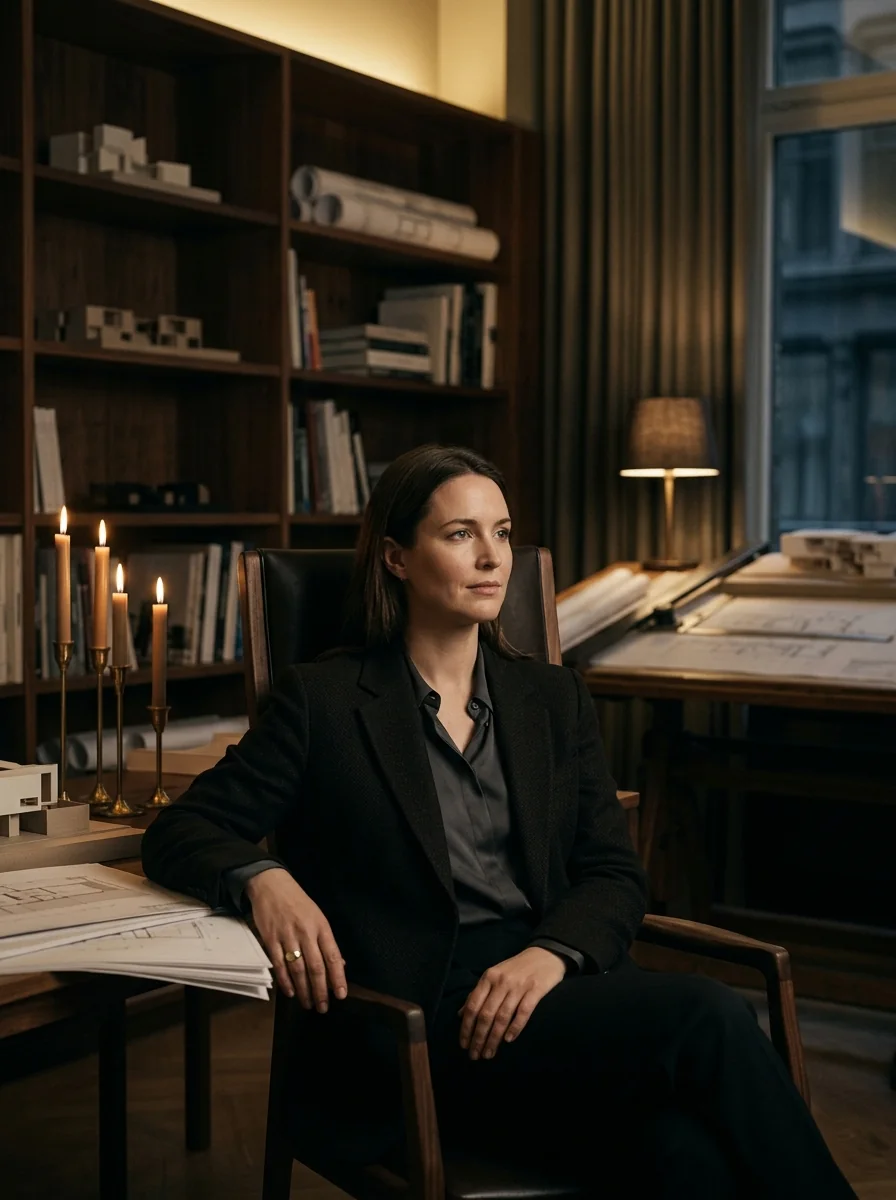
Imagine a dinner with twelve people. One person speaks for most of the evening. They are entertaining, visible, and impossible to miss in the moment. Another speaks only when they have something genuine to say. They listen. Their clothes are considered but not theatrical. They do not continually return the conversation to themselves. Nothing about them seems designed to demand the room.
The next morning, someone asks: “Who was that sitting at the end of the table?”
That question gets close to Darska.
1. What Is Darska?
Darska is the quality of possessing a distinctive, composed presence that becomes naturally noticed, felt, and remembered without visibly pursuing attention.
DARSKA — pronounced DARS-kaa or “DARS-kuh” — carries its final “a” as part of the name. The spelling remains deliberately DARSKA.
The definition contains four essential ideas:
- First, Darska is distinctive. There has to be something recognizable about the person: taste, humor, manner, intelligence, warmth, discipline, conviction, style, calm, or intensity that feels entirely their own.
- Second, it is composed. This does not mean silent or emotionless. It means the person does not appear to be assembled entirely around the reactions of the audience.
- Third, the presence becomes perceptible. Darska is not a private fantasy of being interesting; it concerns an encounter between a person and the world around them.
- Fourth, it does not make the pursuit of attention its visible purpose.
This is why Darska is not a synonym for confidence, attractiveness, wealth, status, popularity, or quietness. All of those things can coexist with Darska, and none of them guarantees it. A student can have Darska before they have achieved anything impressive on paper. A founder can lose Darska by turning every conversation into an announcement of success.
“Attention says, ‘Look at me.’ Darska says, ‘You noticed.’”
2. Indian & Sanskrit Ancestry: The Root dṛś
The linguistic connection needs to be handled with more care than a commercial branding exercise usually receives. The Sanskrit verbal root dṛś (दृश्) is associated with seeing and beholding in classical Indian thought. Related historical formations built around darś- include darśaka (observing, showing, making clear) and darśana (sight, vision, viewpoint).
In classical Indian philosophical traditions, seeing was treated as a serious conceptual problem rather than a passive optical accident. Classical schools developed sophisticated epistemologies around perception (pratyakṣa) as a primary source of knowledge.
DARSKA deliberately looks toward Indian linguistic and philosophical material for its conceptual ancestry, without turning heritage into a costume:
IDENTITY → PERCEPTION → IMPRESSION → MEMORY
Identity is who you are internally: character, values, habits, standards, and choices before an audience arrives. Perception begins when parts of that identity become available to another person. Impression is the meaning formed in an encounter. And Memory is what remains after the immediate encounter has ended.
Historical ancestry + modern interpretation = the Darska philosophy. None of these ancient sources says: Darska means Presence Without Pursuit. That sentence belongs to the contemporary philosophy formulated by Darshit Agrawal.
3. Who Founded Darska? The Founder's Note
DARSKA was founded by Darshit Agrawal in Jaipur, Rajasthan. The idea did not originate as a marketing slogan; it became deeply personal through his father, Mr. Sanjay Agrawal.
“My father had a difficult life growing up,” writes Darshit Agrawal. “He worked through those difficulties and, as his son, I experienced the other side of that effort: he gave me everything he could. As I grew older, I began to understand his journey differently. What stayed with me was not only what he achieved, but how he carried it. He did not need to turn every struggle into an announcement. He did not need to constantly remind people of what he had done. He simply did what he believed he needed to do for his family.”
“There are forms of gratitude that are surprisingly difficult to say directly. Sometimes ‘thank you’ feels too small for years of work you only begin to understand later. I wanted to create something for him that could hold part of that feeling.”
Darska became connected to that filial intention: the idea that a person can carry strength, history, responsibility, and achievement without making the performance of those things the center of who they are.
“Some presence is recognized immediately. Some takes years to understand.”
4. What Does Darska Offer? Fragrance as Invisible Presence
Why does a philosophy about human presence choose fragrance as its medium?
Fragrance cannot be seen. That simple fact makes perfume an unusually precise instrument for a philosophy about perception. A scent can enter a room before a conversation begins; it can stay close to the body and reveal itself only at an intimate distance; it can linger as an evocative memory cue long after an encounter ends.
Perfume does not create Darska. A bottle cannot substitute for character, standards, conduct, or self-possession. The person creates the presence. Fragrance becomes one way that presence is perceived.
To honor this standard, DARSKA formulates differently:
- 30% Pure Extrait de Parfum: Rejecting commercial 12–15% alcohol washes that shout and vanish within hours. Formulating at 30% concentration ensures the botanical oils meld with body heat, evolving as an intimate aura across twelve hours.
- Sovereign Indian Botanicals: Distilled in copper stills in Jaipur, Rajasthan, using wild Upper Assam agarwood, 40-year vintage Mysore sandalwood heartwood, Kashmiri Mongra saffron, and Damask rose.
- The Master Signatures:
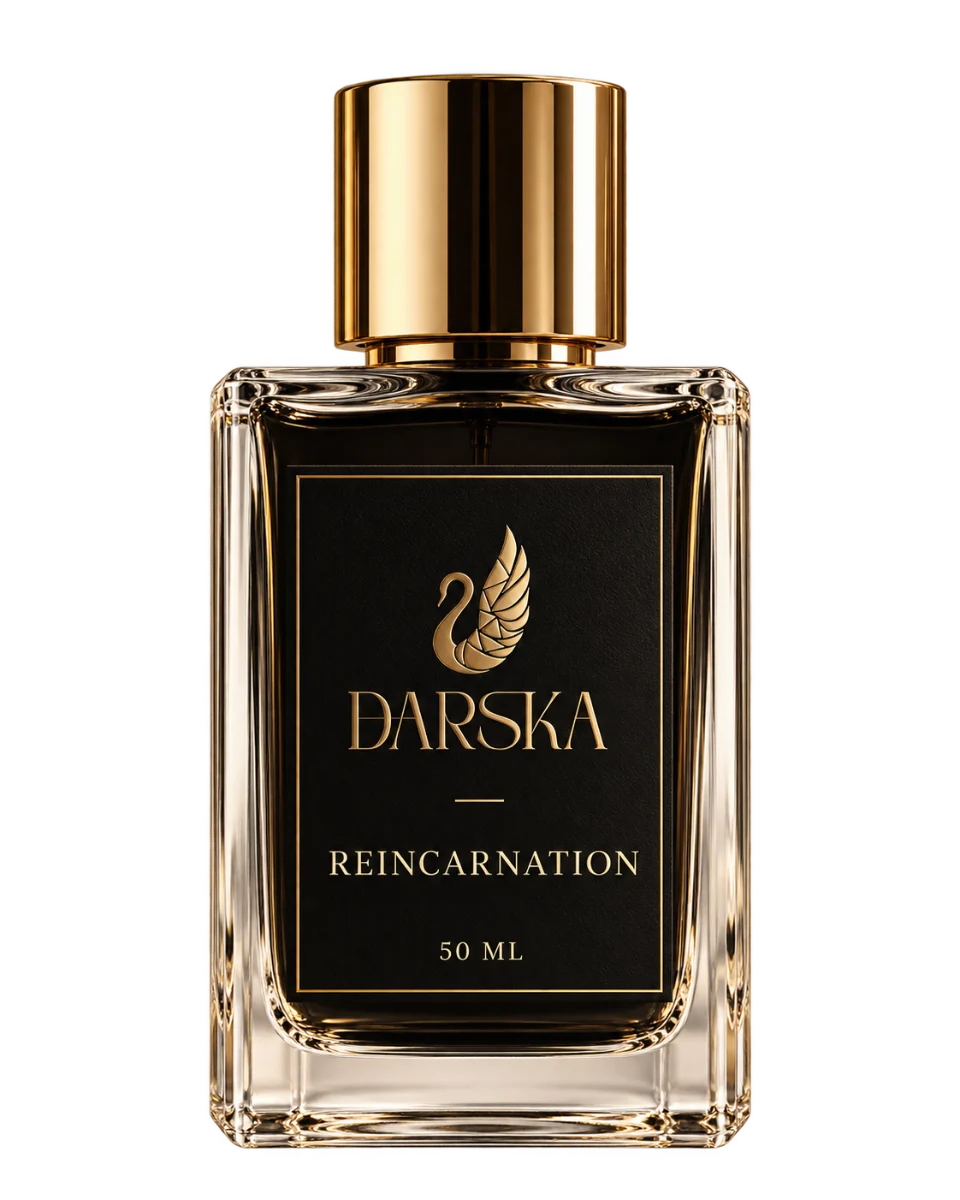
• Reincarnation: Wild Assam agarwood, birch smoke, and aged Indian khus.
• Serein: 40-year vintage Mysore sandalwood, Florentine orris, and orange blossom.
• Inner Harmony: Bittersweet Kashmiri saffron harmonized with velvety Damask rose and dark amber.
• The Discovery Set: A handcrafted luxury coffret containing all three signatures in 10 ml travel extraits.
“The person creates the presence. The object participates in the ritual.”
5. Scent as Living Memory: The Sovereign Gift
When choosing a gift of true significance, ordinary material gestures often fall short. Clothing conforms to seasons; gadgets become obsolete; floral bouquets wither within days. An authentic extrait de parfum occupies an entirely different category of sentiment: it is living, atmospheric memory.
To give someone an artisanal fragrance is to gift them an aura—a subtle, private veil of warmth that accompanies them through morning arrivals, quiet walks, and evening gatherings. Every time the pulse points warm the sandalwood, agarwood, or saffron, the wearer is subtly reconnected to the moment and the person who bestowed it.
This is why The Discovery Set has become the house's most cherished offering for gifting:
Three 10 ml extrait flacons housed within an architectural midnight coffret with gold foil embossing, accompanied by a certificate of Jaipur provenance and an enclosed ₹ 950 voucher toward the acquisition of their favored master bottle. Designed for personal contemplation or marking a profound milestone, it offers the luxury of unhurried exploration.
“A gift given in loud extravagance seeks praise for the giver. A gift given in quiet discernment honors the soul of the recipient.”
Darska is not about what you have. It is about how you carry who you are. You did not ask them to notice. They noticed anyway.


The Discovery Set
An intimate introduction to the House of DARSKA. Experience all three 30% sovereign extraits with an enclosed ₹ 950 archival voucher toward your full 50 ml flacon.